Educator & book-club guide
Thystlewicke School for Vampires
About the book
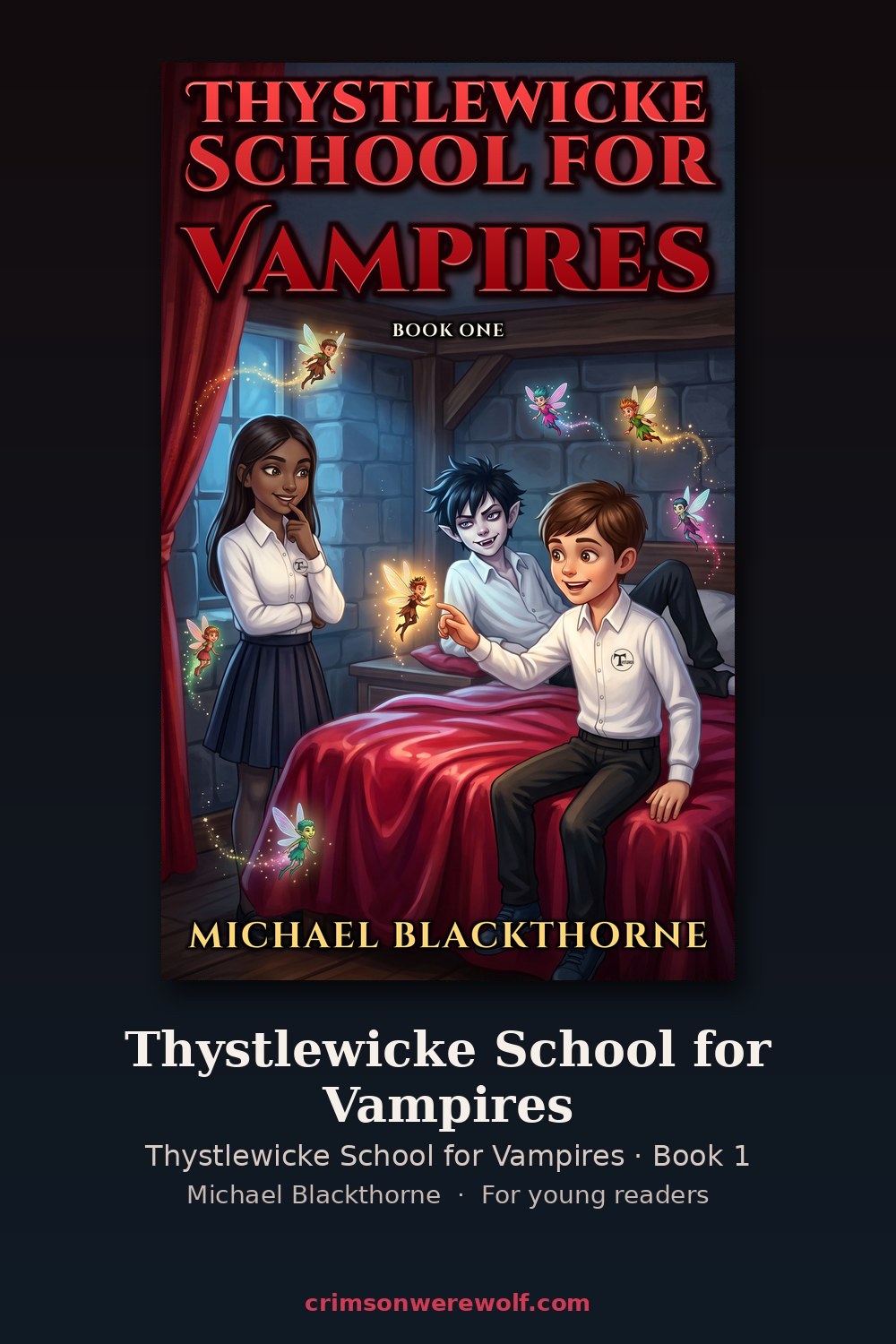
Eleven-year-old Edmond Spencer lives a quiet life in London with his mother, a night-shift doctor, and his Nanny Olive. Then one night a stranger pulls him out of bed and delivers him to a hidden boarding school where every other student is a vampire.
At Thystlewicke, Edmond is a "normal", the only human in a school of the undead. The headmaster is unhappy, the teachers are suspicious, and some of the students would like nothing better than a snack. But there are also flying soccer matches, a talking PDA named Artie, a tipsy Sprite King and friends who might be worth the danger.
Edmond has to find out why he was sent there, what the school is hiding and whether a normal boy can learn real magic before something at Thystlewicke gets him killed.
Content notes for adults
Spooky fantasy peril. Vampires are a real threat to Edmond, and a student character speaks about the deaths of his parents and wanting revenge. Some immortal adult characters make flirtatious or grown-up jokes that will go over most younger readers' heads. Edmond is given coffee and is hungry for much of the book. There is no graphic violence and no strong language. We recommend an adult preview the book for readers under eleven.
Themes to explore
- Being the outsider
- Edmond is the only normal in a school of vampires. Students can connect his experience to being new, different or left out.
- Friendship across differences
- His closest friends are the very creatures he was told to fear. What makes a friendship possible when two people are so different?
- Trust and secrets
- The adults at Thystlewicke keep things from Edmond, and his mother's past is a mystery. When is a secret protective, and when is it unfair?
- Rules and fairness
- The school's rules protect vampires and normals in different ways. Students can weigh whether a rule that treats groups differently can still be fair.
- Revenge versus justice
- One of Edmond's friends wants revenge for his parents. Edmond tells him it won't bring them back. Who is right?
Before reading
- What do you already know about vampires from stories, films or games? Which of those ideas do you think this book will keep, and which might it change?
- Imagine waking up in a strange school where everyone else is different from you. What would you do first?
- Boarding-school stories are a popular kind of book. Can you name any others? What do they usually have in common?
Discussion questions
Chapters 1–4
- Edmond stares at the headmaster's tie to avoid looking at his face. What does that small detail tell you about how he feels?
- How do the staff react to Edmond being a normal? Find a line that shows their attitude.
- What clues does the book give about Edmond's mother before Thaddeus tells him the truth?
- Edmond faints when he learns the truth. Is that a believable reaction? How would you react?
Chapters 5–8
- Why does the Porta-dim excite Edmond instead of frightening him?
- What makes the vampire soccer match different from an ordinary game? Would you want to play?
- At the end of Chapter Seven, Edmond realizes he is enjoying himself. What changed his mind about Thystlewicke?
- Who are Edmond's allies so far? Who seems dangerous? Make two lists and explain your choices.
Chapters 9–12
- Edmond gets in trouble for giving the sprites Royal Nectar. Was it his fault? Who else should share the blame?
- The golden apple goes missing. List the suspects and your reasons for each.
- Edmond decides he might not run away if he can learn magic. Is learning magic worth the danger? Why?
- Artie says he simply does not understand normals. What is it about Edmond that confuses him?
Chapters 13–16
- Edmond tells Crichton that killing won't bring his parents back. Crichton says it would still feel wonderful. What do you think about each of their views?
- How does Edmond use what he has learned at the school to solve problems in these chapters?
- How has Edmond's opinion of vampires changed from the first chapter to the last?
- The book leaves some mysteries for later. Which unanswered question are you most curious about, and what do you predict?
Vocabulary
Activities
- Mythology research
- Thystlewicke is full of creatures from myth: a siren, a faun, sprites and a Greek golden apple. Students each research one and present the original myth alongside how the book uses it.
- Invent a sport
- Vampires play soccer while flying. Students design a sport for magical creatures, with rules, equipment and a team name, then write a short match report.
- Write Edmond's letter home
- Edmond can't contact his mother. Students write the letter he would send after his first week, in his voice.
- Rules debate
- The school punishes vampires and normals differently. Students list the school's rules they can find, then debate which are fair and rewrite the unfair ones.
- Map the school
- Using details from the book, draw a floor plan of Thystlewicke: the dormitories, headmaster's office, warehouse, kitchens and stadium.
Curriculum connections
- Theme and summary: CCSS RL.5.2, RL.6.2
- Character comparison and change: CCSS RL.5.3, RL.6.3
- Comparing stories in the same genre: CCSS RL.5.9
- Narrative and opinion writing: CCSS W.5.1, W.5.3, W.6.3