Educator & book-club guide
Dragon's Reach: The Friendship
About the book
Twelve-year-old Ren is a werewolf, the son of the pack's leader, and the target of every bully in the forest. One day, running for his life, he hides at the one place werewolf law forbids: the stone cottage where a human boy named Johnny lives with his mother.
Johnny has a wooden sword, a head full of his late father's battle stories, and no intention of letting anyone push his new friend around. But werewolves and humans, called Purebloods, aren't supposed to be friends, and the pack isn't happy about it.
When slavers raid the forest and carry off children, Johnny and Ren are caught too. Now a human mother, a witch, a high elf and a pack of werewolves will have to work together to bring them home.
Content notes for adults
Mild fantasy peril suitable for most readers eight and up. Bullies corner and threaten Ren. Slavers kidnap children, tie them up and treat them roughly, and the heroes fight to free them. Both boys have lost a parent, and grief is handled gently. There is no strong language, and violence is brief and not graphic.
Themes to explore
- Friendship across differences
- Ren is a werewolf and Johnny is a Pureblood human. Their friendship breaks the rules on both sides.
- Standing up to bullies
- Johnny refuses to let his friend be pushed around, and Ren slowly learns to stand up for himself.
- Prejudice
- Johnny's parents taught him never to let race affect his judgment. Students can explore how the pack and the humans each judge the other.
- Courage
- The second book is called Courage, but this one is full of it too. Who is the bravest character, and what kind of bravery do they show?
- Family and loss
- Johnny's father and Ren's mother have died. Each boy carries that loss differently.
Before reading
- What do you already know about werewolves from stories? Do you think this book will make them heroes or villains?
- Have you ever been told you couldn't be friends with someone? What happened?
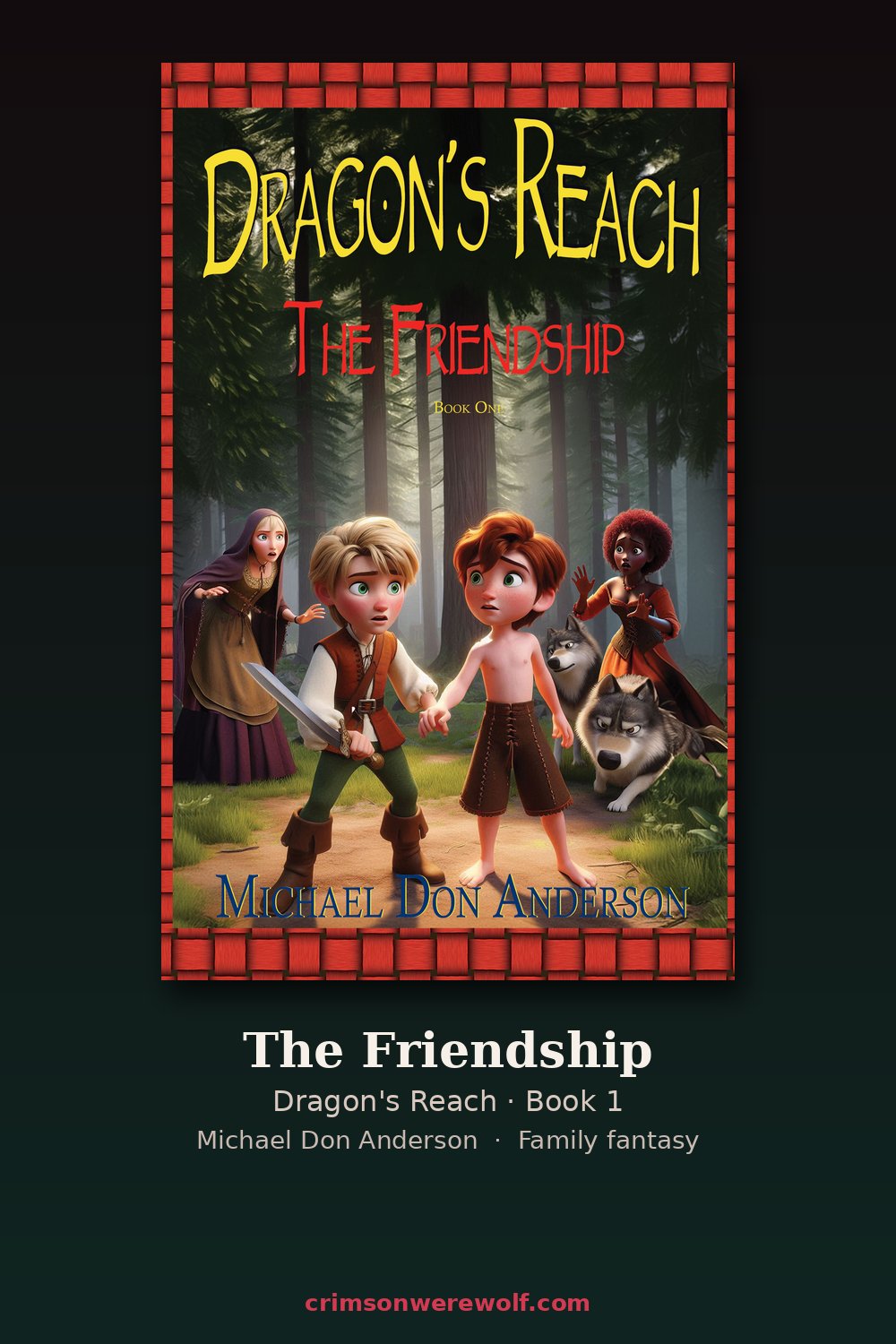
- Look at the cover. Predict what the friendship in the title will be.
Discussion questions
Chapters 1–6
- Why is Ren running at the start of the story? How does the author make the chase feel exciting?
- Describe Johnny in three words. What does his practice dummy tell you about him?
- Why does Johnny's mother, Serina, refuse to forbid the friendship?
- Ren is afraid Johnny will be scared of him once he knows the truth. Was his fear fair?
Chapters 7–13
- Kemick, Ren's father, tells Johnny to understand his adversary. What does that mean? Is it good advice?
- Ren says he didn't really stand up to the bullies. Do you agree with him?
- How does Johnny help Ren in Chapter Eleven? What does Ren ask him for afterward?
- Thessa the witch uses magic to see faraway places. If you could use her spell once, what would you look for?
Chapters 14–19
- How are Johnny and Ren captured? What mistakes did the slavers make?
- Johnny pretends to be a coward in the slavers' camp. Why might that be a clever choice?
- Serina and the werewolves don't trust each other but must work together. How do they manage it?
- What skill does Serina have that the werewolves don't? Why does that matter?
Chapters 20–25
- Who outsmarts the slavers, and how?
- Serina says Johnny's father is inside him. What do you think she means?
- How have Ren and Johnny each changed since the first chapter?
- The next book is called Courage. Which character do you think it will be about, and why?
Vocabulary
Activities
- Map the forest
- Using clues from the book, draw the forest: the Steward cottage, the werewolf village, the slavers' camp, the mountain path and the ocean.
- Friendship poster
- Students make a poster of five things that make Johnny and Ren good friends, with a quote from the book for each.
- Pack research
- Research real wolf packs. How do real wolves decide who leads? Compare that with Kemick's pack.
- Write a new chapter
- Write a short scene of Johnny teaching Ren a sword move, told from Ren's point of view.
- Anti-bullying discussion
- List the ways characters respond to bullying in the book. Which responses work? Which would work at school?
Curriculum connections
- Theme and summary: CCSS RL.3.2, RL.4.2, RL.5.2
- Describing characters and their actions: CCSS RL.3.3, RL.4.3
- Narrative writing: CCSS W.3.3, W.4.3